Explainer
A simple circuit connects an energy source to a load through a complete electrical path. The load might be a lamp, a motor or another device that turns electrical energy into something useful. Voltage, current and resistance describe what happens in that path, while power tells us how quickly energy is transferred.
The key ideas
- A source supplies energy.
- A closed path allows continuous current.
- A load converts electrical energy.
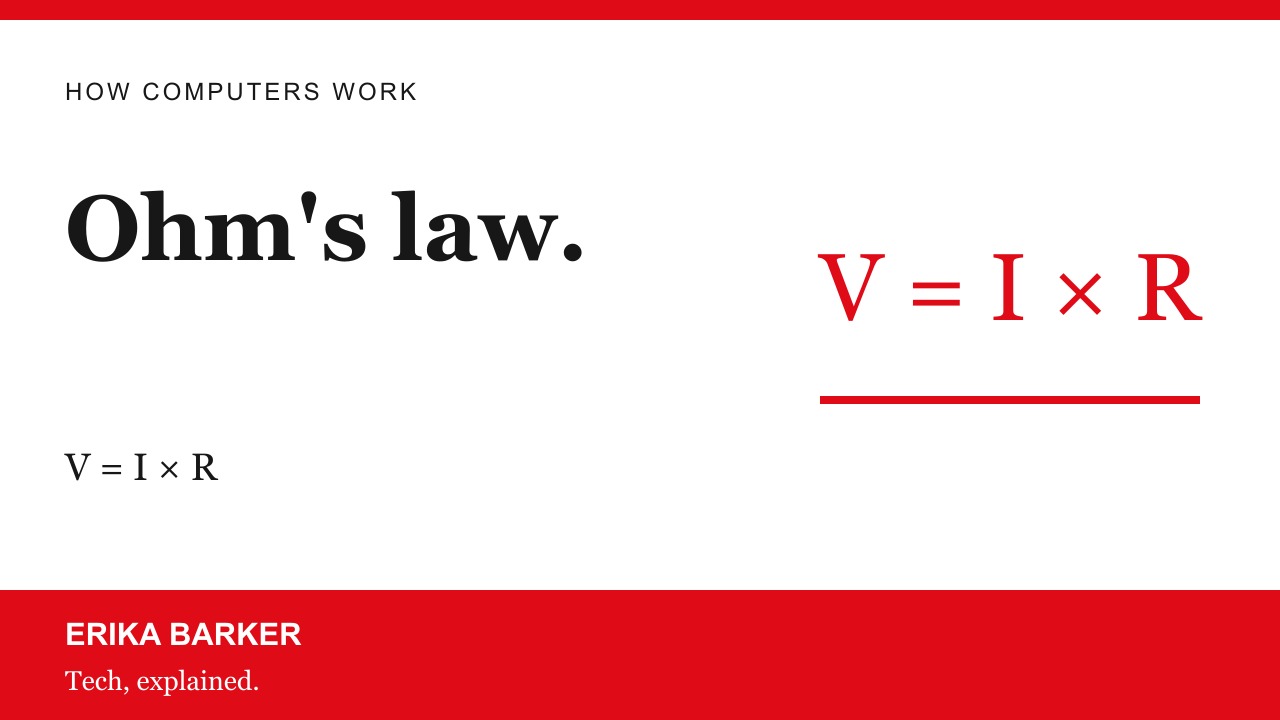
- Ohm’s law relates V, I and R.
Explore the subject
Original recording: TikTok, 2023-02-16.
Video transcript
Read the original recording’s transcript
Automatically transcribed from the original recording. Small transcription errors may remain.
Circuits, the secret life of electricity. Welcome to the world of circuits, where electricity flows and sparks with life. A circuit is like a river, carrying the flow of electrical energy from one place to another. But what makes a circuit work? And how does electricity know where to go? Well, let's start with the basics. A circuit needs three things to work. It needs a source of electrical energy, a path for the energy to flow, and a load to use that energy. Now the source of electrical energy could be a battery or a generator, and the path for the energy to flow is a series of wires that are connected together.
The load could be anything from a light bulb to a motor, and it's what uses the energy from the circuit to do work. Now let's go ahead and take a closer look at how the energy flows through a circuit. Imagine you're standing in the middle of a river and you're trying to send a message downstream. The message is like the electrical energy and the water is like the electrons that carry that energy. Just like the message has to flow downstream in order for you to send it, the electrical energy has to flow through the circuit in order for the load to use it. Now the key to making this
happen is the wires. The wires in a circuit are like the banks of the river, guiding the flow of energy to where it needs to go. But just like a river can have obstacles that slow down the flow of water, a circuit can have resistance that slows down the flow of energy. That's why we have Ohm's law, which tells us that the amount of energy that flows through a circuit depends on the voltage, the resistance, and the amperage. Now by understanding Ohm's law, we can design circuits that deliver just the right amount of energy to the load. So there you have it, the secret life of electricity in a circuit.
With a source of energy, a path to flow, and a load to use that energy, you can harness the power of of electricity to bring light and life to the world.