Explainer
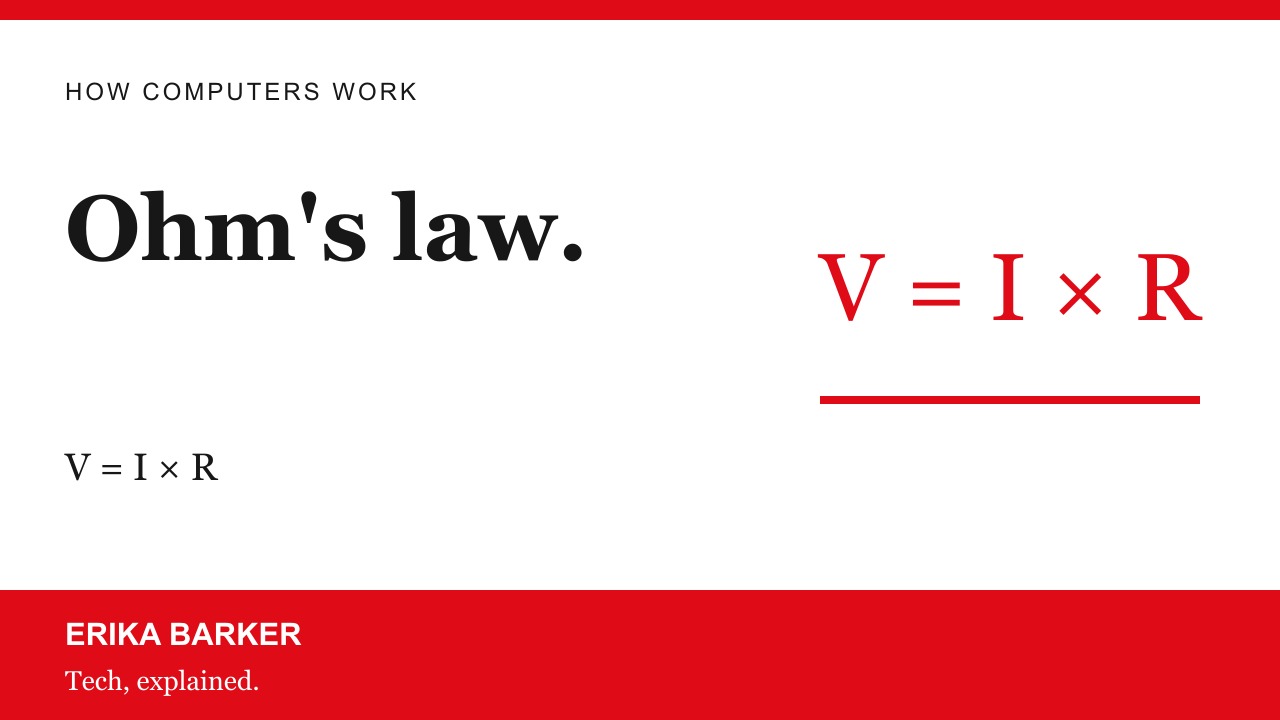
A resistor gives us a way to control current in a circuit. For the same applied voltage, a larger resistance allows less current to flow and turns electrical energy into heat. That makes resistors useful for setting operating conditions and protecting components from excessive current.
The key ideas
- Resistance is measured in ohms.
- Current depends on voltage and resistance.
- Resistors dissipate power as heat.
Explore the subject
Original recording: TikTok, 2023-01-29.
Video transcript
Read the original recording’s transcript
Automatically transcribed from the original recording. Small transcription errors may remain.
Let's talk about the backbone of electronics. This little guy. And without it, we would be stuck in the dark ages. This is a resistor. So what does it do? Well, it's a simple component that does exactly what it sounds like. It resists the flow of electricity. Think of it like a road block for electricity, slowing it down and controlling the flow so it doesn't damage delicate components or blow out your circuits. Now, why exactly are resistors important? Well, without resistors, you have all sorts of issues with your electronics. Imagine trying to
cook a meal without adjusting the heat. Your food would either burn to a crisp or be raw in the middle. That's exactly what happens in a circuit without resistors. It can pry components and lead to all sorts of problems. Now the first resistors were simple wire wound devices created in the late 19th century by German physicist Georg Simon Ohm, who we will talk about in the future video. Over time since Ohm's day, resistors have become smaller and more advanced, and with new materials and technologies leading to more precise and efficient resistors that we use
using our smartphones and our computers, which we take for granted. So how does it all work really? Every resistor has a resistance value measured in ohms, which determines how much it will resist the flow of electricity. When electricity flows through the resistor, it encounters resistance, which slows it down and dissipates the energy as heat. It's like a water pipe, and the bigger the pipe, the more water can flow through it. And the smaller the pipe, less water can flow. The same goes for electricity and resistors. So resistors might not be the flashiest components, but they play a crucial role in electronics.
Without them, our gadgets and our gizmos, they just would not work, and we'd be stuck in the dark ages. So the next time you're using your phone or turning your TV on or off, take a moment to just appreciate these little unsung heroes of the electronics world.